Custom CRM vs. Off-the-Shelf: How to Actually Decide
Solve TrendJuly 18, 20266 min read
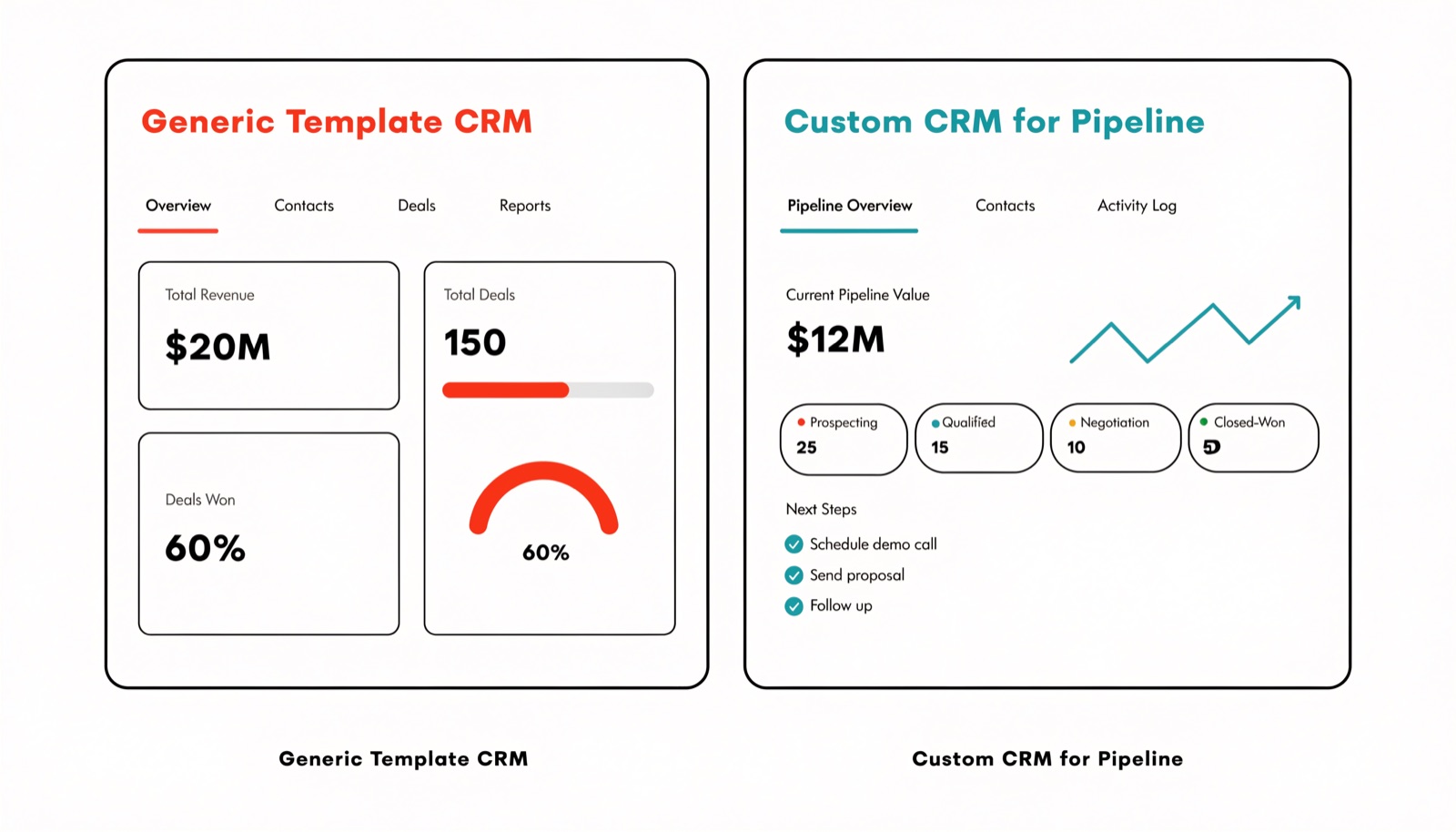
A CRM is where your revenue actually lives: every lead, deal, and follow-up. So when a business outgrows its spreadsheet, the instinct is either "let's buy the big-name tool" or "let's build exactly what we need." Both instincts are half right. The decision isn't about which is better; it's about where you are.
Start with off-the-shelf until it hurts
For most teams under a certain size, a configured platform (HubSpot, Pipedrive, Attio, even a well-structured Airtable) will get you 80% of the way in days, not months. You get pipelines, reporting, and integrations out of the box, and you don't own the maintenance. The right first question is almost never "what should we build," it's "what can we configure."
The catch is the last 20%. That's where the platform's assumptions start fighting the way your business actually works: a sales process that doesn't fit their stages, a data model that doesn't match your objects, an automation their plan won't let you build.
Signs you've genuinely outgrown the platform
- You're paying for per-seat plans mostly to unlock one feature you actually need.
- Your team lives in three tools and copies data between them by hand.
- The platform can't model a core part of your business without ugly workarounds.
- You want automations or an AI layer the platform simply won't let you build.
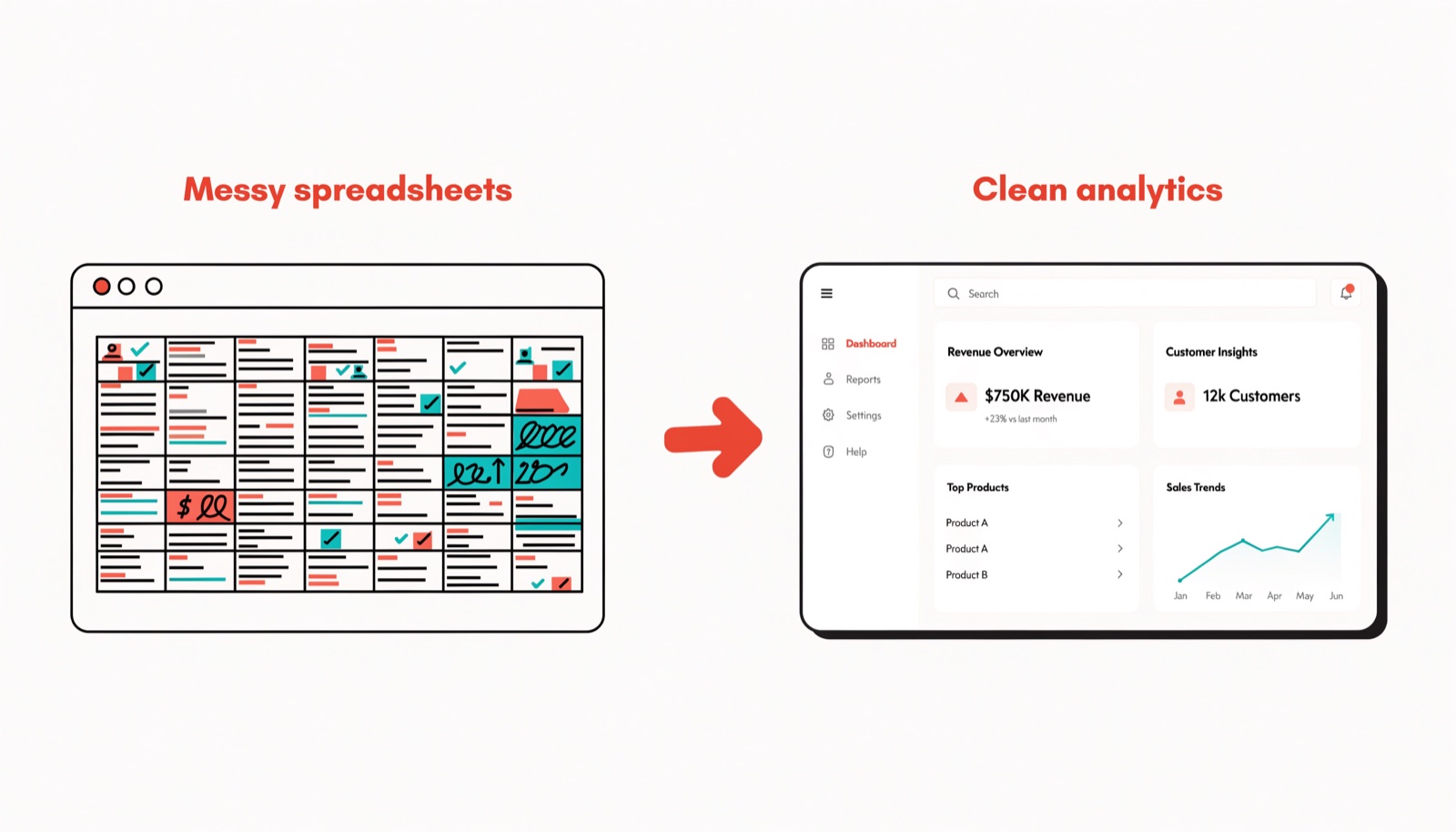
- You're exporting to spreadsheets to do the reporting that matters.
When two or three of those are true, custom stops being a luxury. A CRM built around your pipeline (your objects, your stages, your integrations) removes the friction instead of working around it. And once you own the system, adding an AI automation layer (enrichment, scoring, auto-summaries, drafted follow-ups) is a feature you build, not a plan you upgrade to.
Configure until the platform's assumptions cost you more than a custom build would. That line is different for every business. The job is finding yours.
The middle path most people miss
You rarely have to choose all-or-nothing. Often the smartest move is to keep the platform for what it's good at and build a thin custom layer on top: a dashboard that unifies your tools, an integration that syncs them, or an AI automation that handles the repetitive work. You get the speed of off-the-shelf and the fit of custom, and you can replace the platform later if you ever truly outgrow it.
If you're staring at this decision right now, that's exactly the kind of thing worth a 30-minute conversation before you commit to either path.
Working through this yourself?
If you’re weighing a custom build, a CRM, or an AI automation, we’re happy to talk it through: scope first, pitch later.